

Artists’ varnish and shellac are both protective topcoats, but each suits different materials. Artists’ varnish is intended for fine art, such as oil and acrylic paintings. Shellac, a traditional natural resin, is mainly used for woodworking, furniture, and certain crafts.
What is the difference between artists’ varnish and shellac?
Here is a direct comparison to help you choose the right finish for your project:
- Artists’ varnish’s primary use is protecting oil, alkyd, and acrylic paintings.
Shellac finishes wood furniture, seals porous crafts, and serves as an undercoat. - Artists’ varnish is removable (can be dissolved with solvents for painting restoration).
Shellac finish is considered permanent. While you can remove it with alcohol, it is not intended for painting conservation. - Artists’ varnish is highly flexible and moves with a stretched canvas without cracking.
Shellac is brittle and will crack on flexible surfaces such as canvas. - Artists’ varnish is available in crystal-clear, non-yellowing formulas, such as mineral spirit-based acrylic varnishes.
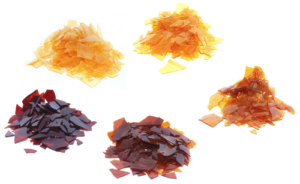
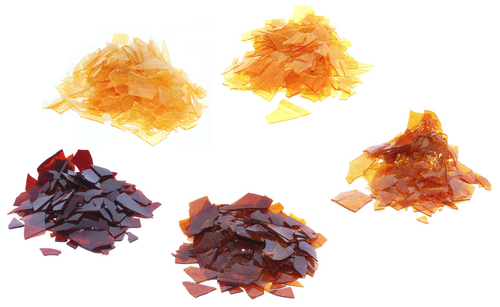
Shellac provides a naturally warm, amber tint, from blonde to dark garnet, and may darken over time. - Artists’ varnish dries in minutes for spray acrylic varnish; days/weeks for traditional oil varnishes
Shellac dries extremely fast (to the touch in 15–30 minutes). - Artists’ varnish is Mineral spirits, turpentine, or water (depending on the type).
Shellac is Denatured alcohol (methylated spirits).
Artists’ Varnish: The Top Choice for Fine Art
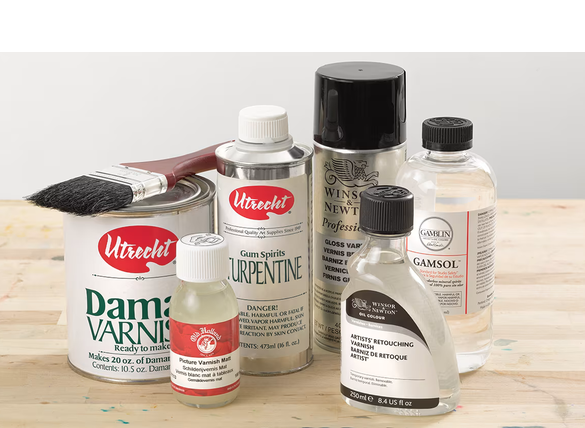
Artists’ varnishes, gloss or matte acrylic varnishes, and modern mineral spirit varnishes, are made especially for fine art canvases and panels.
• Archival Protection: These varnishes help shield delicate paint layers from UV rays, dust, and pollution.
• Removability: A real artist’s varnish can be safely removed by a conservator, even decades later, to clean off dirt without harming the paint underneath.
• Surface Matching: They come in specific sheen levels (Gloss, Satin, Matte) to unify the final look of a painting.
See Winsor & Newton Artists’ Gloss Varnish removable with UV protection. See all Artists’ Varnish and Sealers.
Shellac: Ideal for Wood and Sturdy Crafts
Shellac comes from a natural substance made by the lac bug and is mixed with alcohol. It works well as a sealer, but it does not perform well on flexible surfaces.
- Barrier Coat: Shellac makes a great isolation coat in woodworking because it stops knots, resin, and odours from coming through.
- Not for Canvas: When used on a flexible canvas, shellac will crack quickly as the canvas moves with changes in temperature and humidity.
- Sensitivity: Shellac is very sensitive to moisture and heat. For example, it can leave white rings if you put a hot mug or water on it, and it will dissolve if it touches alcohol.
We stock a selection of shellac finishes, including Orange shellac, Lemon shellac, Blond shellac, Clear Shellac, and Ruby shellac.
The Exception: Shellac in Art
Artists usually use shellac in two ways: as a fixative for dry drawing materials like charcoal or pastel on paper, or as a liquid barrier on wooden art panels before painting.